

Welcome at vanderstok consultancy.
Internet Involvement:Peter van der Stok has contributed to the deployment of Internet Protocol (IP) from the very start of Internet's existence in 1985. At that time Peter deployed IP technology to communicate between mini computers placed around an underground ring of 28 km circumference to control the LEP accelerator at CERN. In 2001 when Internet entered our homes via ADSL modems, Peter used IP technology to connect home entertainment devices such as TV and video recorders with the UPnP standard. From 2012 Peter is involved in making the CoAP Internet protocol suitable for Machine to Machine (M2M) communication between small devices (lamps, switches, etc.) in buildings. Look here at Peter's involvement in the standardization at Internet Engineering Task Force (IETF);.
CoAP Protocol:
The Constrained Application Protocol (CoAP) is based on the REST (Representational State Transfer) communication model like http. It species the behaviour of the get put, post and other methods. Because low resource devices rely on small batteries, and the coomunication chips are responsible for most energy consumption, CoAP minimizes the communication overhead with respect to http. The new MATTER standard incorporates CoAP implementations in its supporting network.
Currently, vanderstok consultancy wants to create a scheduling box which conforms to MATTER specification to reduce the reliance on remote servers thus increasing the private network's independence and reduce its vulnerability to outside threats.
When you envisage to use CoAP for your current and future control networks, you can contact vanderstok consultancy to discuss possibilities and implementations.
Key words
Internet standard, home network, home control, building control, networked embedded systems.

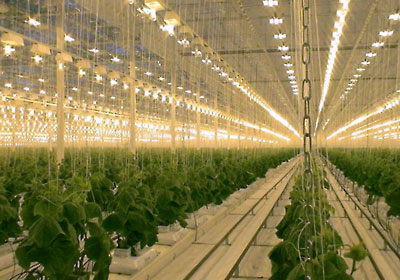
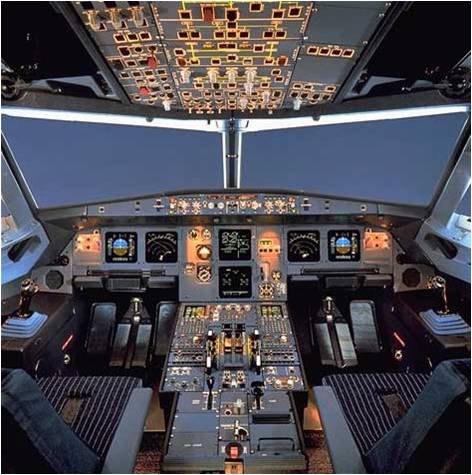
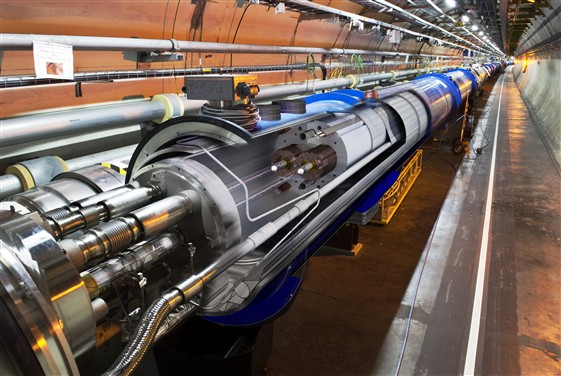
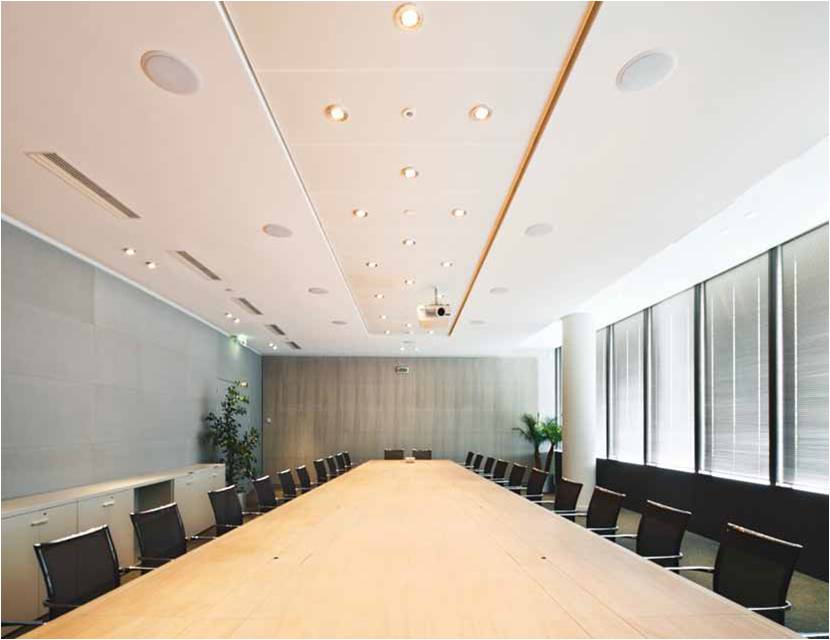
Overview of 4 technology domains
vanderstok consultancy has considerable experience in real-time networking for large scale installations.
We will be happy to use our experience to bring your projects to a sucessful conclusion.
Horti Culture experience  Period 2008 - 2010: Wireless experiment
Technology aspects include: Lights inter-connected with 60GHz RF beamsDALI commands transported in IP packets
Our contribution:
Fully automatic auto-configuration of networkFault-tolerant packet routing without storage of path informationIndividual control of lamps with absence detection Office mesh experience Period: 2008 2012, IP for Lighting
Technology aspects include:Mesh networks based on IEEE 802.15.4 connect to lamps, switches and other equipmentMesh networks are interconnected with IP routers to IP backbone of buildingOur contribution:
Standardization of mesh networking in ROLL, CoRE, 6LoWPAN working groups of IETF and implement on test installations Accelerator control experience
Period: 1980-1989 LEP project
Technology aspects include:UNIX workstations, distributed over the access points around the 28 km tunnel, are interconnected with Internet protocol UNIX workstations are connected to VME crates to access equipmentVME crates contained directories to equipment to be controlled in the tunnel via MIL1553B links.From workstations in control room Remote Procedure Calls are done to servers in UNIX workstations around ringOur contribution:
Provision of the complete software platform in UNIX machines and VME crates Avionics experience
Period 1994 - 1998: BRITE-Euram project
Technology aspects include:Integrated Modular Avionics (IMA) modules are interconnected via the ARINC 659 backplane bus of an IMA cabinetCrates are interconnected with ARINC 629 avionic databusOur contribution:
Specifying the architecture of fault-tolerant software copies distributed over modules and cabinetsCalculating minimum and maximum responses times between software copies communicating over a sequence of ARINC 659 and ARINC 629 databusesEuropean projects:
Peter van der Stok has particpated in many European projects. He has led and/or started for example
 Wirelessly Accessible Sensor Populations (WASP)
The WASP project aimed to facilitate WSN adoption by bringing together relevant stakeholders from different disciplines, each having their own professional vocabulary and skills, to derive generic (hence cost-efficient) solutions. WASP concentrated on three domains with a high potential benefit from WSN-based solutions. The domains are: (1) elderly care to improve personal independence (2) livestock farming, to enable the trend towards larger farm sizes and (3) automotive applications, to decrease the cost, weight, and increase freedom of placement compared to wired solution. |
|---|
 BEing on Time Saves energY (BETSY)
The BETSY project aimed at multimedia streams on wireless hand-held devices seamlessly adapted to fluctuating network conditions and available terminal resources while reducing the energy consumption of the stream processing. This way the user can enjoy true multimedia experiences with freedom of movement in a networked home. Trade-offs were made between the consumption of networked resources, such as bandwidth use, CPU consumption, memory use and power consumption, while guaranteeing end-to-end timeliness - required for streaming data. |
 Federated Applications Based on Real-Time Interacting Components (FABRIC)
The FABRIC consortium contributed to the Ambient Intelligence promise in the home by concentrating on a computing- and network- infrastructure. FABRIC developed an architecture in which several standards and technologies in the home networking context can be integrated. The High Level Architecture (HLA) of the US Department of Defense (DoD), also known as the IEEE 1516 standard, was taken as starting point for the FABRIC. HLA wass chosen for its provision of loose but timed coupling between complex systems. |
vanderstok consultancy